
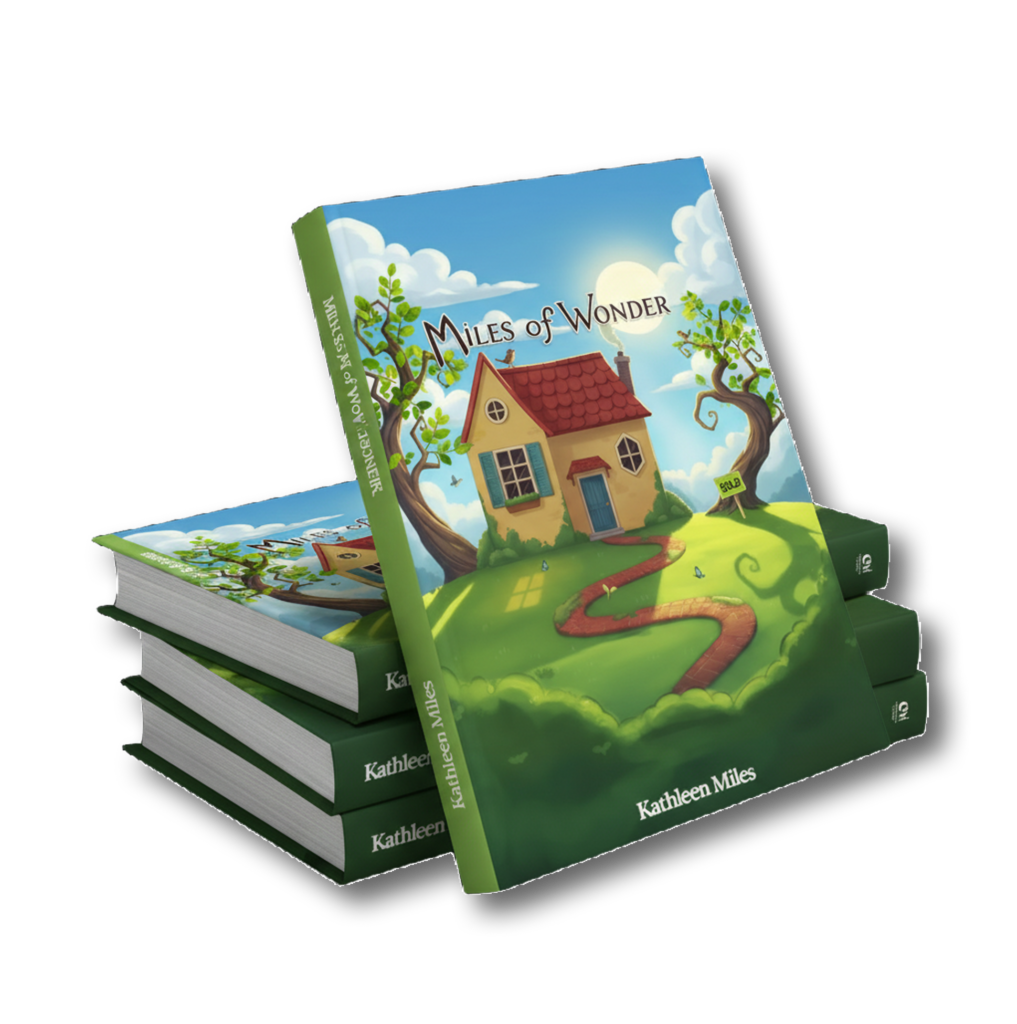
Miles of Wonder By Kathleen Miles
Miles of Wonder by Kathleen Miles is a thoughtful collection of poems that finds meaning in ordinary lives and overlooked moments. The book moves through themes of aging, love, hardship, regret, humor, and resilience, capturing scenes that feel familiar yet deeply personal. With clear, approachable language, the poems reflect on family bonds, social struggles, moral choices, and the quiet weight of memory, inviting readers to pause and recognize themselves within the verses. Throughout the collection, moments of darkness are balanced with warmth, irony, and gentle hope. From reflective pieces on loss and loneliness to lighter observations drawn from daily life, the poems create an emotional rhythm that feels honest and grounded.
About Miles of Wonder
Life is filled with moments we understand immediately—and others we spend years trying to understand.
Miles of Wonder explores both.
Kathleen Miles approaches ordinary people and experiences with curiosity, compassion, humor, and an awareness that even seemingly simple moments can carry deeper meaning.
Throughout the collection, readers encounter older people looking back on life, parents watching children grow, people wrestling with hardship, individuals searching for hope, relationships being tested, memories refusing to disappear, and characters facing the consequences of their choices.
At other times, Kathleen turns her attention toward animals, nature, social observations, unusual characters, and the lighter absurdities of everyday life.
The result is a collection that moves comfortably between laughter, sadness, reflection, and wonder.
Looking at Life From Another Perspective
One of the recurring qualities of Miles of Wonder is its willingness to look beyond appearances.
In “A Poem’s Climax,” an elderly man moves slowly through an ordinary day while carrying the weight of loneliness, memory, and hope.
“Old Lady” asks younger readers to consider aging not as something distant, but as part of the same human journey.
“This Criminal, My Son” looks at punishment from the perspective of a mother who still sees the child behind the man others judge.
In “The Mountain,” the struggle of getting through a difficult day becomes an exhausting climb up a steep and unforgiving face.
Again and again, Kathleen Miles invites readers to consider what another person may be carrying beneath the surface.
Poems About Memory and Growing Older
Time, aging, memory, and loss appear throughout Miles of Wonder.
Kathleen explores what it means to look backward while continuing to move forward.
Memories of family, places, childhood, love, and people who are no longer present become part of the emotional landscape of the collection.
In “Lighthouse,” an old landmark becomes a bridge between the past and present.
In “Past,” memory remains after the death of someone deeply loved.
“Sad Legacy” reflects on a life cut short and the simple wish to have been given enough years to grow old.
These poems recognize that aging can bring difficulty, but also perspective—the ability to understand the value of moments that may once have seemed ordinary.
Family, Love, and Relationships
Family relationships are another important thread running through the collection.
Parents watch their children leave home.
Partners struggle to maintain relationships.
Mothers worry about their children.
People remember those they have lost.
In “Leaving,” parents experience the complicated mixture of pride and sadness that comes when a son leaves home to begin his own life.
“Vows” reflects on marriage as something requiring patience, accommodation, commitment, and room for two people to continue growing together.
Other poems look at betrayal, companionship, grief, trust, regret, and the lasting impression people leave on one another.
Faith, Judgment, and New Beginnings
Spiritual reflection also appears throughout Miles of Wonder.
Kathleen writes about God, repentance, judgment, love, generosity, renewal, and the possibility of becoming different from the person one has been.
In “Judgement,” a person is confronted with the pain caused to others and begins to recognize the need for change.
“Repent” reduces a large spiritual idea to a few direct lines.
“New Life” uses the transition from winter to spring as an image of renewal and the continuation of life.
Rather than separating faith from everyday experience, these poems often place spiritual questions directly alongside relationships, mistakes, suffering, and hope.
The Harder Side of Everyday Life
Not every poem in Miles of Wonder is comfortable.
Kathleen also turns toward homelessness, unemployment, aging, illness, loneliness, crime, loss, social judgment, environmental concerns, and other difficult subjects.
Poems such as “Homeless,” “Clean Bed,” “Fear,” “Courtroom,” and “This Criminal, My Son” approach people and situations from viewpoints that encourage the reader to think beyond first impressions.
These pieces add weight to the collection and balance its humor with compassion and social observation.
Humor Still Has a Place
Even while dealing with serious subjects, Miles of Wonder never completely abandons Kathleen Miles’ playful side.
There are pigs headed to weddings, exhausted sleepers, stubborn technology, strange animals, awkward relationships, unusual characters, and situations in which everyday life becomes just a little absurd.
That contrast is an important part of the collection.
Life can be painful and funny at the same time.
Kathleen’s poetry recognizes both.
Nature, Animals, and the World Around Us
Animals and the natural world appear frequently throughout the collection.
Readers encounter chickens, pets, wolves, otters, birds, spiders, pigs, yellow jackets, grizzly bears, and other creatures.
Nature also becomes a way to think about broader subjects.
The ocean carries destructive force in “El Nino.”
Environmental concerns appear in “Toxins.”
A thin otter becomes part of a poem about human interference with nature and the rules created to protect it.
Elsewhere, landscapes, weather, mountains, deserts, and changing seasons help Kathleen reflect on memory, struggle, renewal, and time.
A Collection for Readers Who Like Poetry With a Human Voice
Miles of Wonder does not stay inside a single emotional category.
It can be playful, uncomfortable, tender, reflective, humorous, spiritual, sad, hopeful, or provocative.
That range is part of its character.
Readers can move from a poem about aging to one about animals, from family to faith, from hardship to humor, and from personal memory to observations about society.
The poems can be read in sequence or individually, allowing readers to return to the subjects and pieces that speak most strongly to them.
About Kathleen Miles
Kathleen Miles is an author and poet whose writing draws inspiration from people, family, memory, relationships, nature, faith, humor, hardship, and the ordinary experiences that shape a lifetime.
Her poetry frequently moves between lighthearted observation and deeper reflection, finding stories and meaning in experiences that can easily be overlooked.
In Miles of Wonder, Kathleen brings those perspectives together in a collection about what it means to live, remember, struggle, love, lose, laugh, change, and continue forward.
Frequently Asked Questions
What is Miles of Wonder about?
Miles of Wonder is a poetry collection by Kathleen Miles exploring life, aging, memory, family, relationships, faith, loss, hardship, nature, humor, resilience, and the experiences that shape how people understand themselves and one another.
Who wrote Miles of Wonder?
Miles of Wonder was written by author and poet Kathleen Miles.
What kind of book is Miles of Wonder?
Miles of Wonder is a collection of poetry that combines reflective, narrative, humorous, spiritual, and observational poems.
What themes appear in Miles of Wonder?
Major themes include aging, memory, family relationships, love, grief, faith, personal responsibility, resilience, social hardship, nature, mortality, humor, and renewal.
Does Miles of Wonder contain humorous poetry?
Yes. Although many poems address serious subjects, the collection also includes playful characters, humorous situations, wordplay, animals, and observations about everyday life.
Does Miles of Wonder explore faith?
Yes. Several poems explore God, judgment, repentance, love, spiritual change, generosity, death, and renewal.
Does Miles of Wonder include poems about family?
Yes. Family relationships are an important part of the collection, including poems about parents, children, marriage, separation, memories, loss, and the emotional bonds between family members.
Does Miles of Wonder discuss aging and mortality?
Yes. Aging, time, death, memory, illness, and the value of life recur throughout the collection.
Can Miles of Wonder be read one poem at a time?
Yes. The book consists of individual poems covering different subjects, so readers can read the collection in sequence or select individual poems at their own pace.
Where can readers learn more about Kathleen Miles?
Readers can learn more about Kathleen Miles and her books through her official website at KathleenMiles.com.
